BPBX
Enterprise IP-PBX for calling, conferencing, and paging
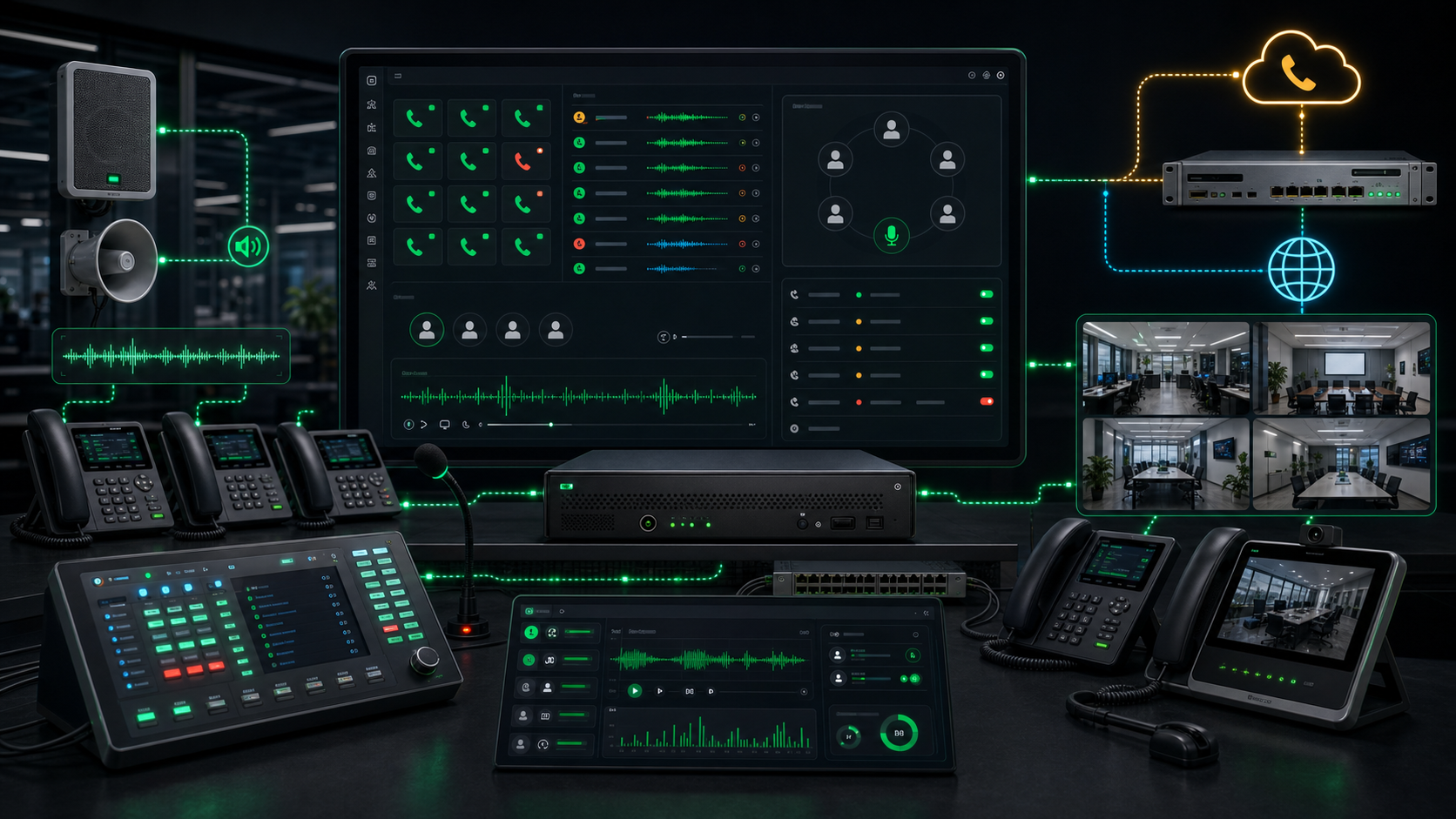
BPBX is a SIP-based IP-PBX platform for extensions, trunks, inbound routing, conferencing, paging, broadcasts, and call recording. Use it to connect IP300 stations and other SIP endpoints, then manage and monitor them from a web console with failover, audit logs, and licensing controls.
Standards-based Enterprise IP-PBX
BPBX supports SIP 2.0, IAX2, and H.323. Deploy it as software alongside existing VoIP networks, SIP phones, and third-party platforms, then scale it to support daily calls or dispatch operations.
All-in-One Communications
Handle individual and group calls, conferences, intercom, paging, and broadcast tasks from one platform. BPBX also supports call recording, interactive voice response (IVR), and inbound routing.
Web console and live monitoring
The web console shows registered extensions, active calls, conferences, and call volume over the past 24 hours. Inspect active channels and bridges or end a call from the console.
Failover and access controls
A two-node hot standby setup switches to the backup node if the primary fails. BPBX also includes login and audit logs, application authorization, token authentication, backups, and one-click upgrades.
Key features
Extension & Trunk Management
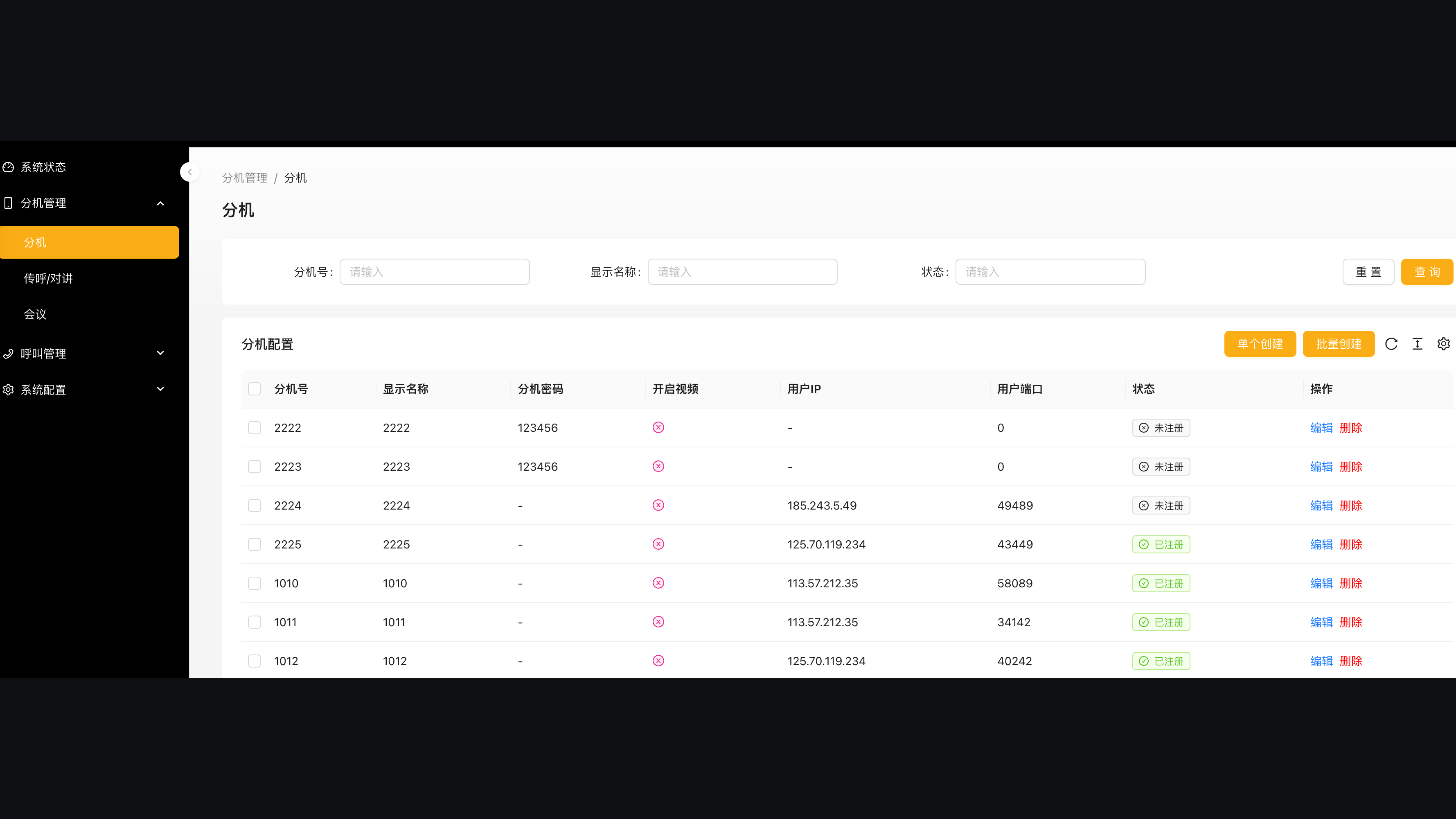
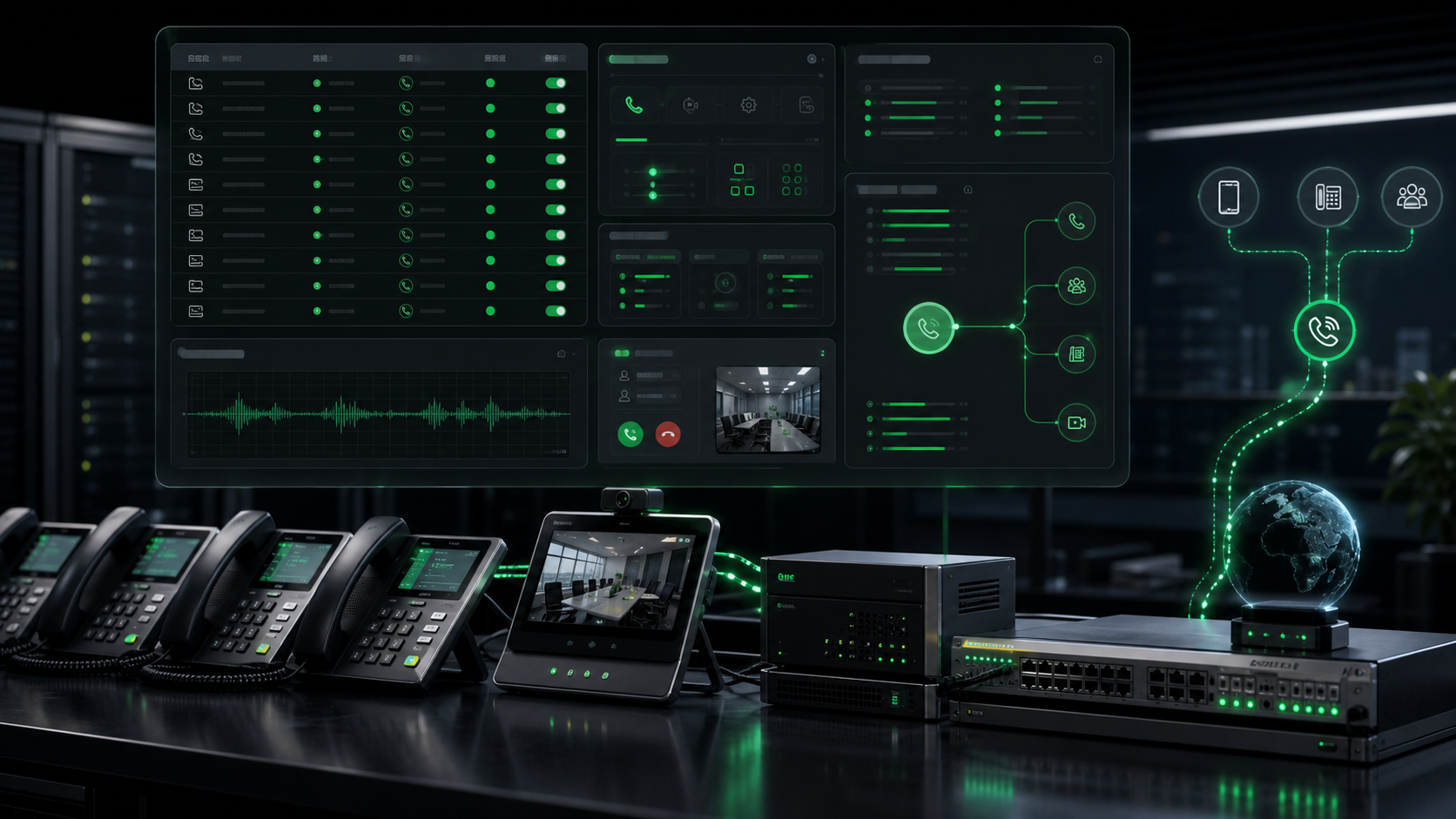
Provision SIP extensions individually or in batches, set passwords and codecs, enable video, and check registration status. Configure trunks for carrier gateways and third-party systems, and route inbound calls to the right destination.
Intercom · Broadcast · Paging
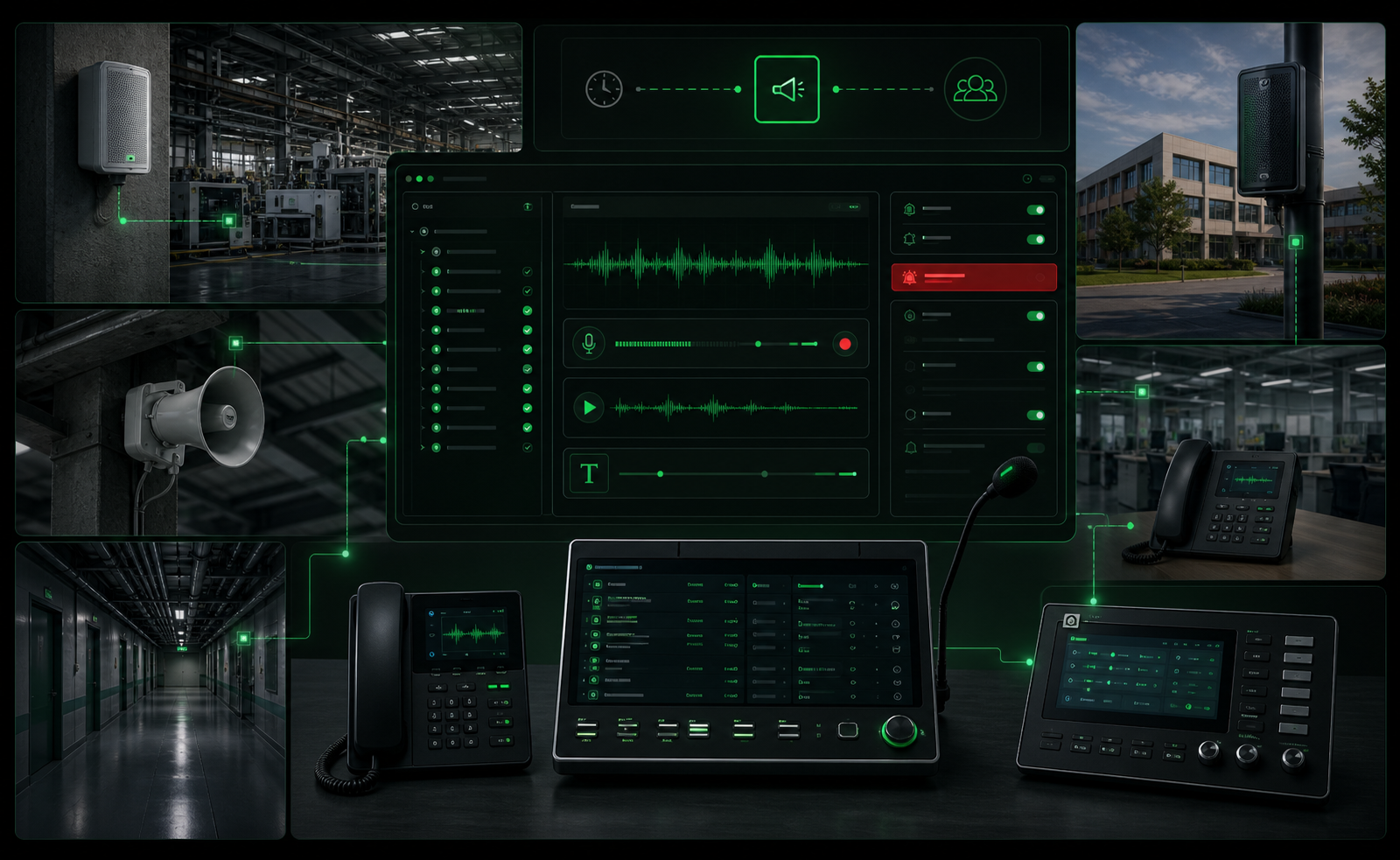
Set up paging and broadcast groups with emergency override, late joining, and call delays. Schedule outbound calls that play prerecorded audio or text-to-speech announcements.
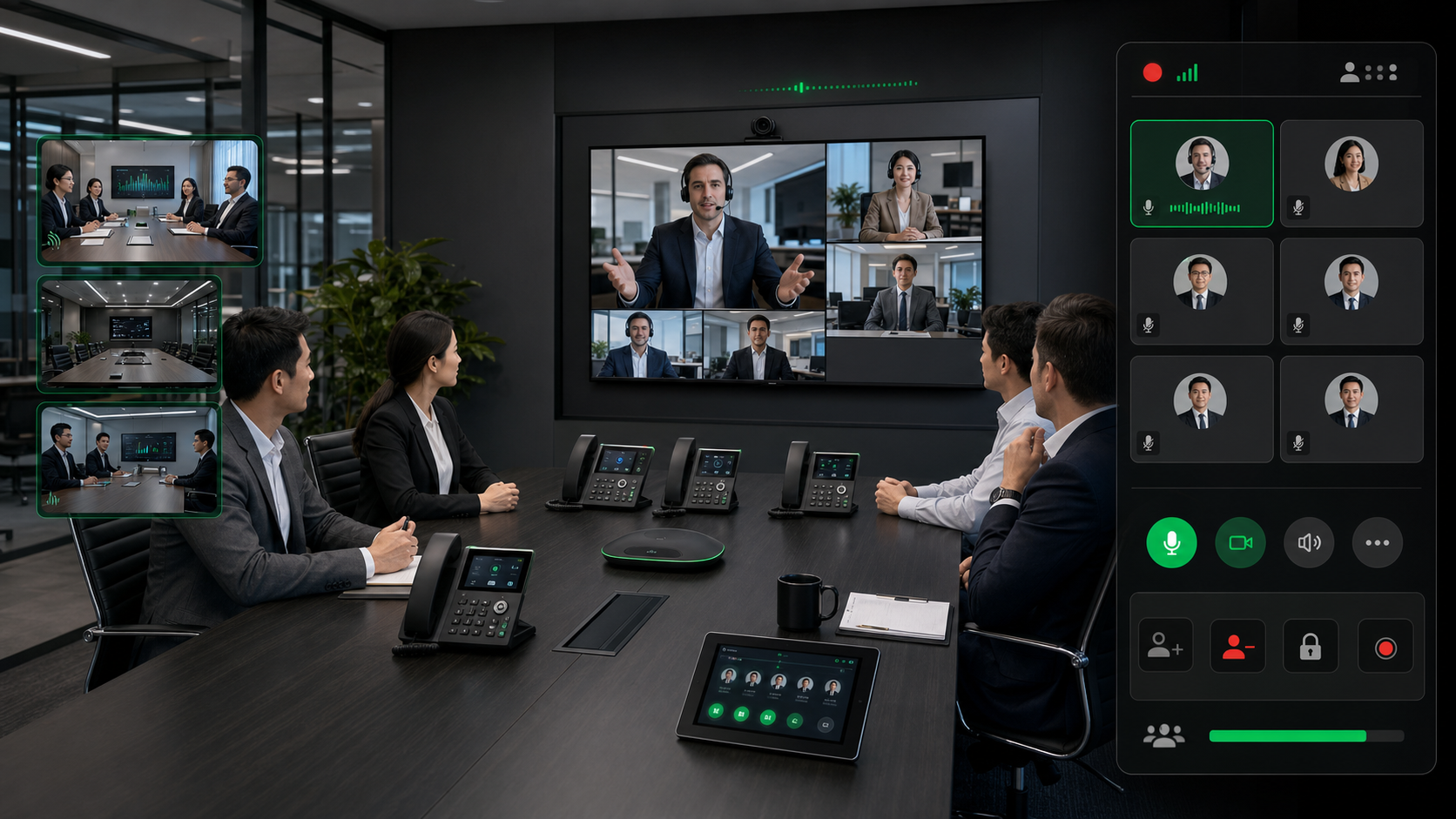
Multi-party Conferencing
Create rooms with participant limits, PINs, recording, and room locking. During a call, invite, remove, mute, or unmute participants.
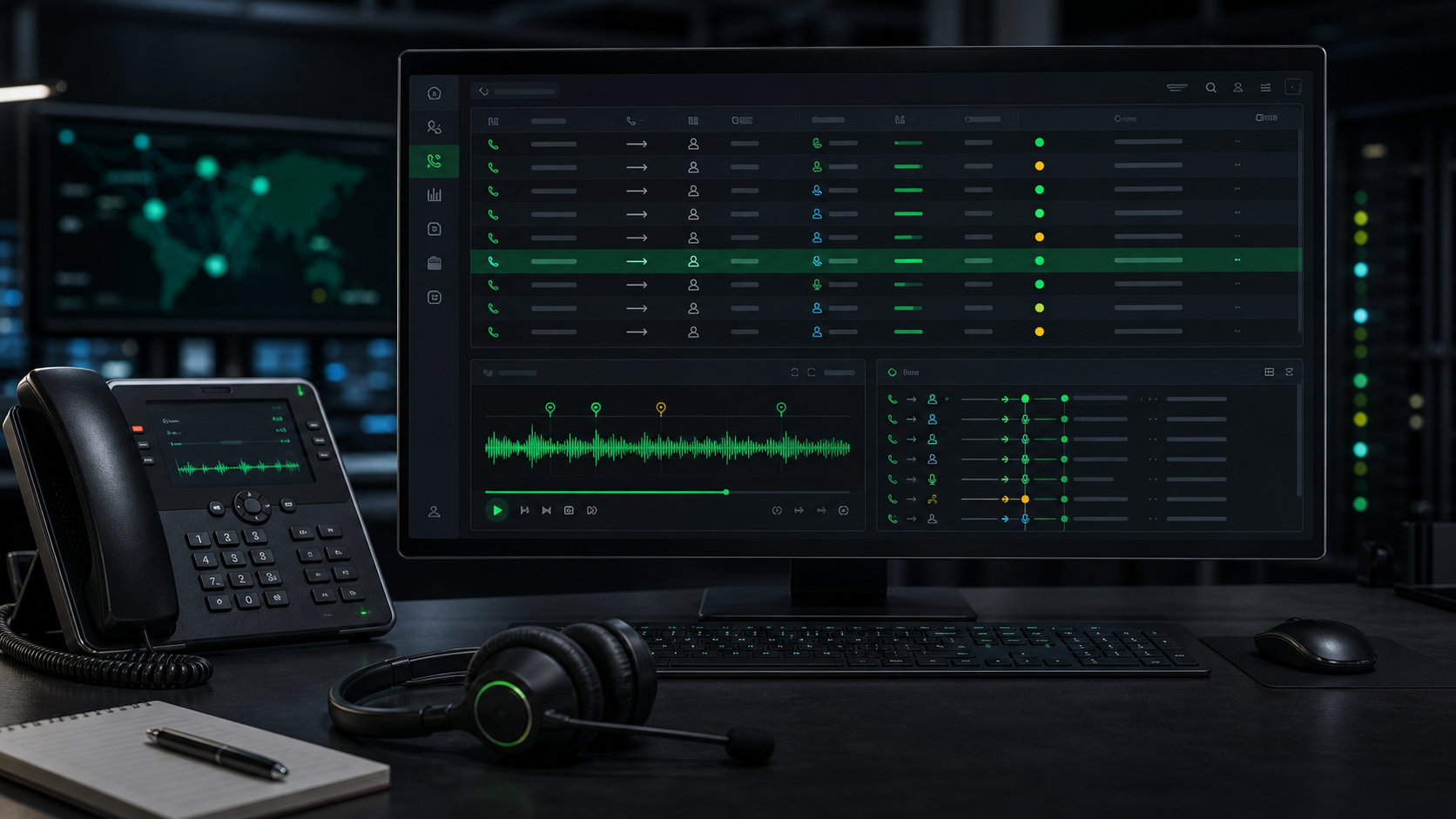
Call Records & Recording
Call detail records (CDRs) capture the caller, recipient, duration, status, application, and time, with downloads for recordings. Call event logs (CELs) help with troubleshooting, auditing, and quality review.
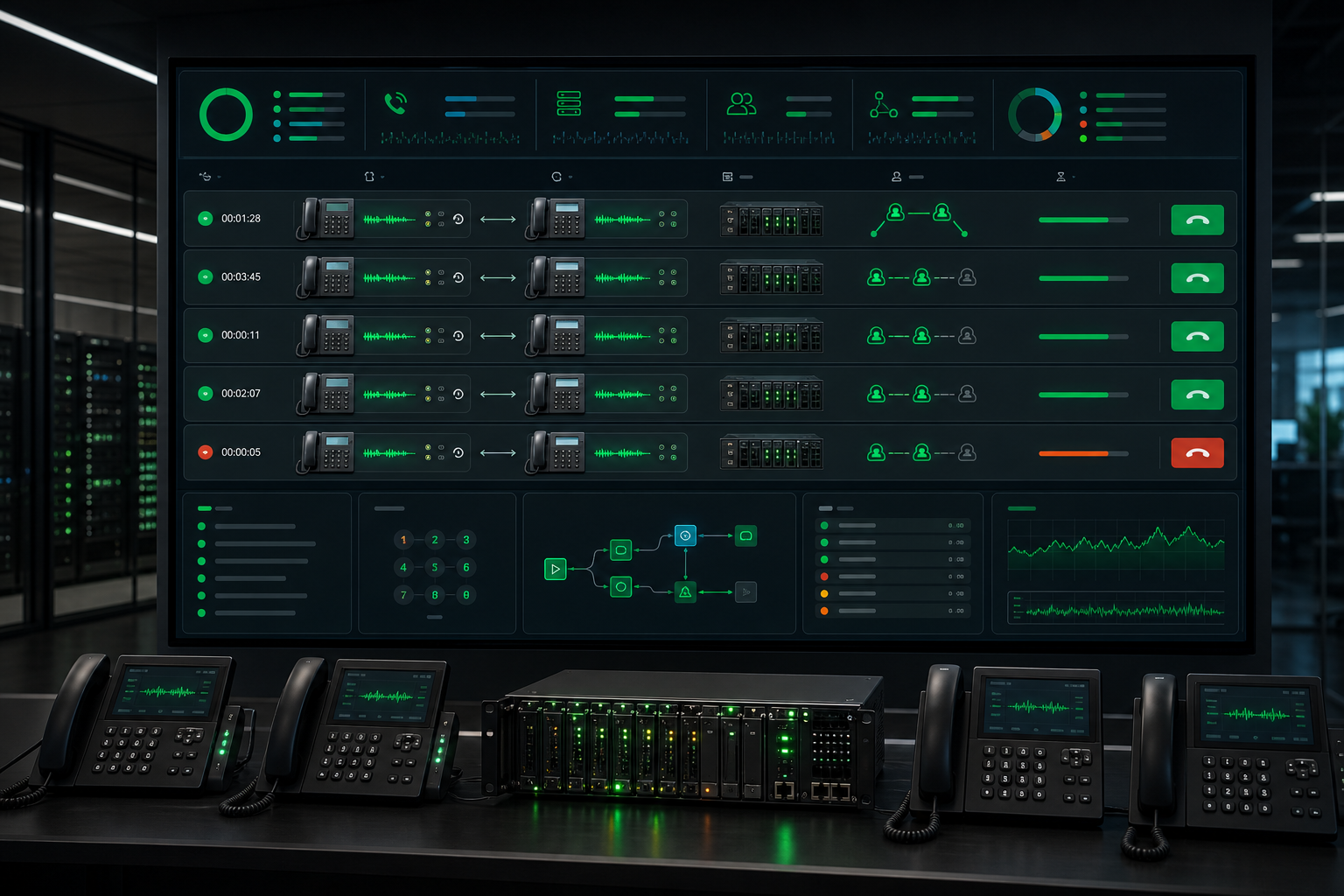
Real-time Call Monitoring
View live calls, dial plans, and channel states, and end problem calls from the console. The dashboard shows registered extensions, concurrent calls, and conferences.
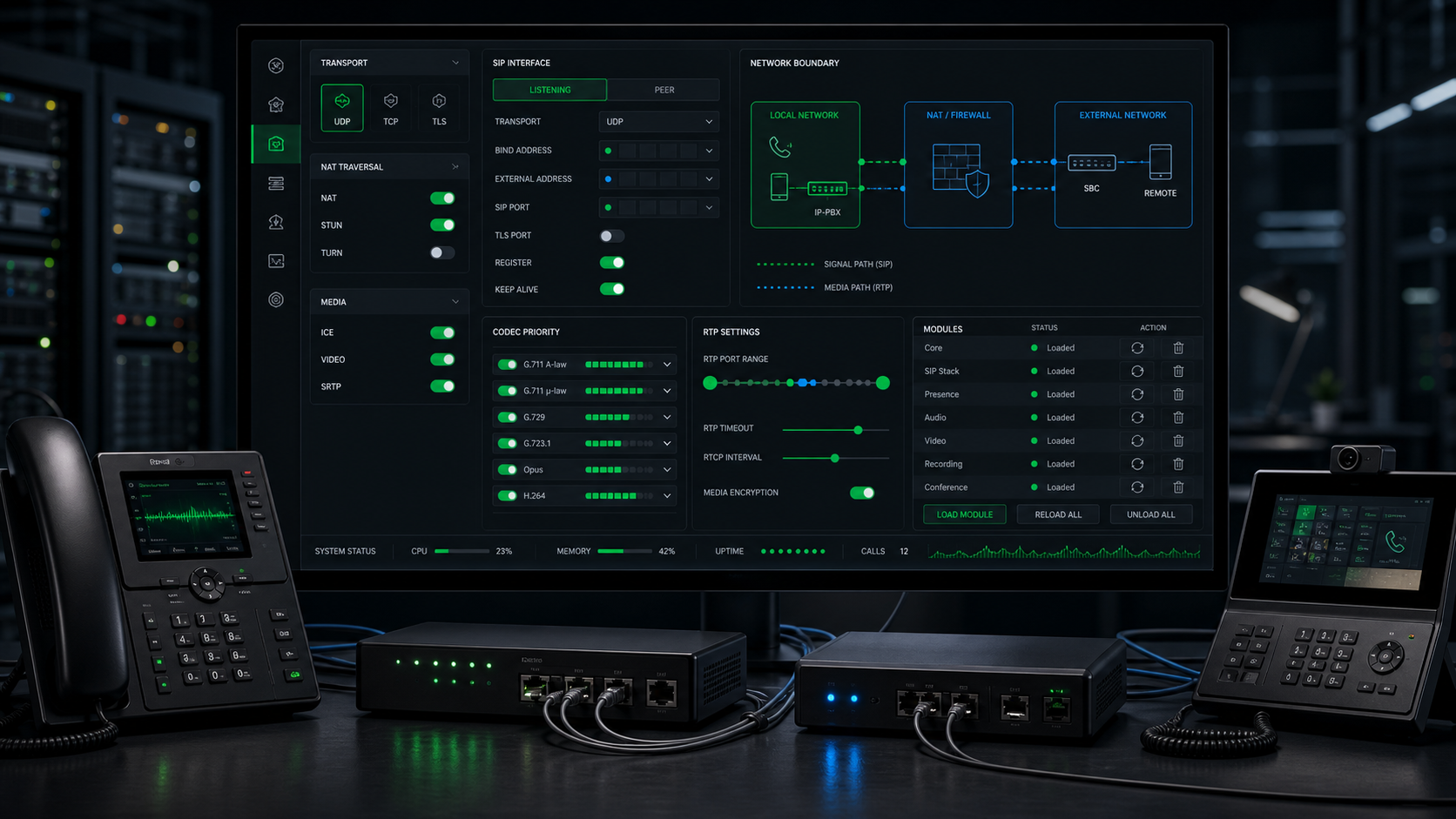
SIP settings and modules
Configure transport, UDP addresses, video, ICE, NAT, local and external networks, and codecs including iLBC, G.729, GSM, G.723, and μ-law. Load or unload modules from the web console.
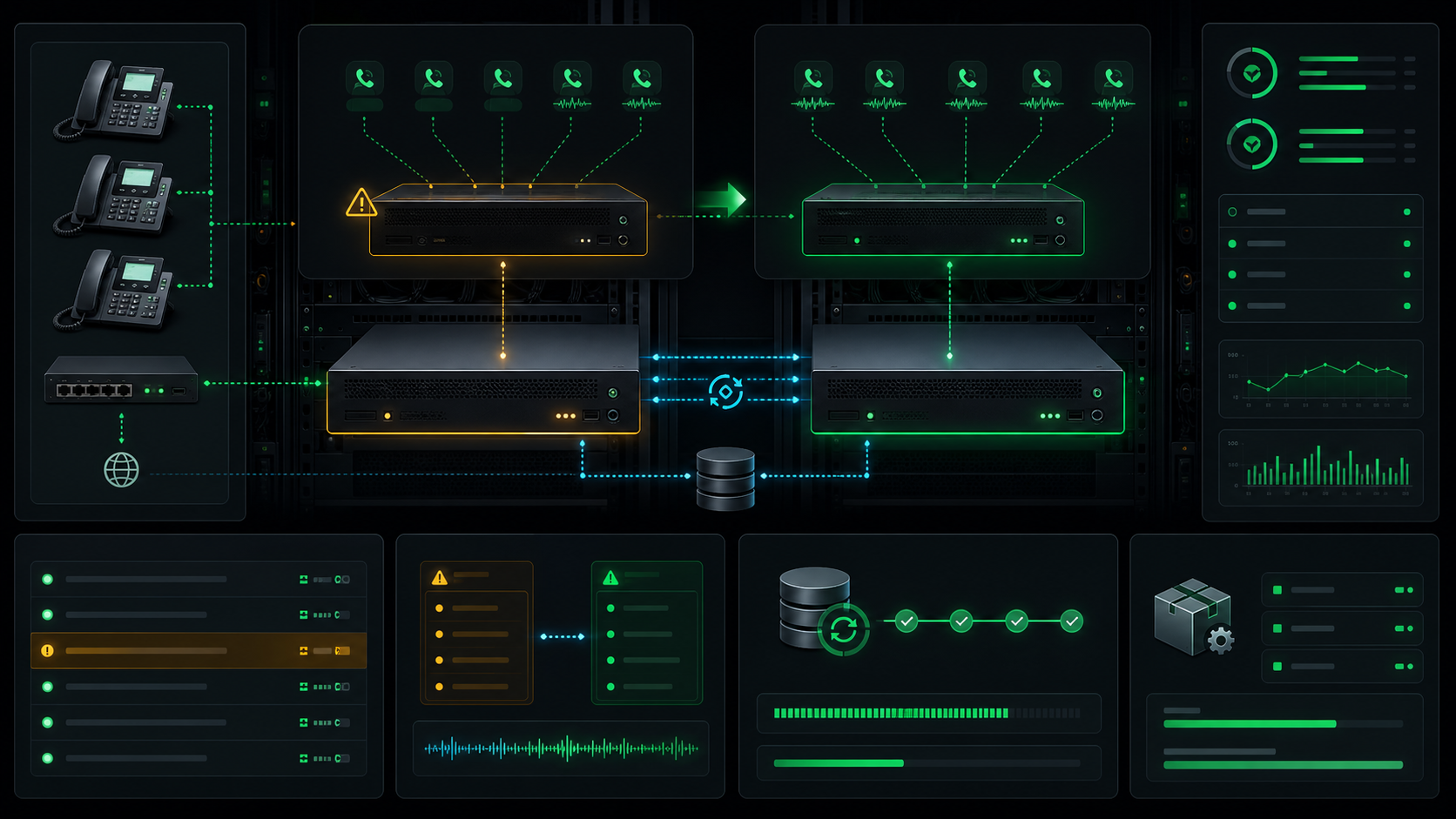
High availability and audit logs
Dual-node hot standby keeps calls and dispatch services available through a primary-node failure. Use the console to review audit and login logs, authorize third-party API access, manage licenses, and run upgrades and backups.
Where it's used
Call Centers & Service Hotlines
Route and distribute high volumes of inbound and outbound calls. Record calls and review call detail records for follow-ups and quality assurance.
Broadcast & Dispatch Centers
Connect IP300 stations for group calls, broadcasts by zone, and scheduled announcements in energy, transportation, and emergency operations.
Conferencing & Multi-site Communication
Connect headquarters, branch offices, and field teams through multi-party audio conferences with live participant controls and recording.
Specifications
- System Type
- Software-defined enterprise IP-PBX (server-side)
- Signaling
- SIP 2.0 (UDP / TCP), IAX2, H.323
- Media
- RTP / SRTP, RTP ports 10000–20000
- Audio Codecs
- iLBC, G.729, GSM, G.723, G.711 (uLaw/aLaw), etc.
- Video Calling
- Supported (SIP video, toggle on demand)
- Core Capabilities
- Extensions / trunks / inbound routing / conferencing / broadcast / paging-intercom
- Call Recording
- Full recording + CDR + CEL event logs
- Real-time Monitoring
- Online extensions / concurrent calls / conferences, live channels & bridges
- Management
- Visual web console + open REST API
- High Availability
- Single-node / dual-node hot-standby, sub-second switchover
- Security & Ops
- Login logs, audit trail, app authorization, system upgrade / backup / restart
- Deployment
- Container / bare-metal / cloud host
Frequently asked questions
IP300 is the dispatch station an operator uses. It registers with BPBX as a SIP endpoint. BPBX manages calls, group paging, conferencing, broadcasts, and recording on the server.

Start with a30-minute conversation
Tell us what you're working on. We'll suggest a practical AI approach and outline a proof of concept.